Parent-Child Interaction Therapy
– A Parent’s Guide –
When meltdowns, defiance, or constant power struggles have taken over your home, Parent-Child Interaction Therapy gives you live, in-the-room coaching to rebuild connection and calm with your child.

— YOU’RE NOT DOING ANYTHING WRONG
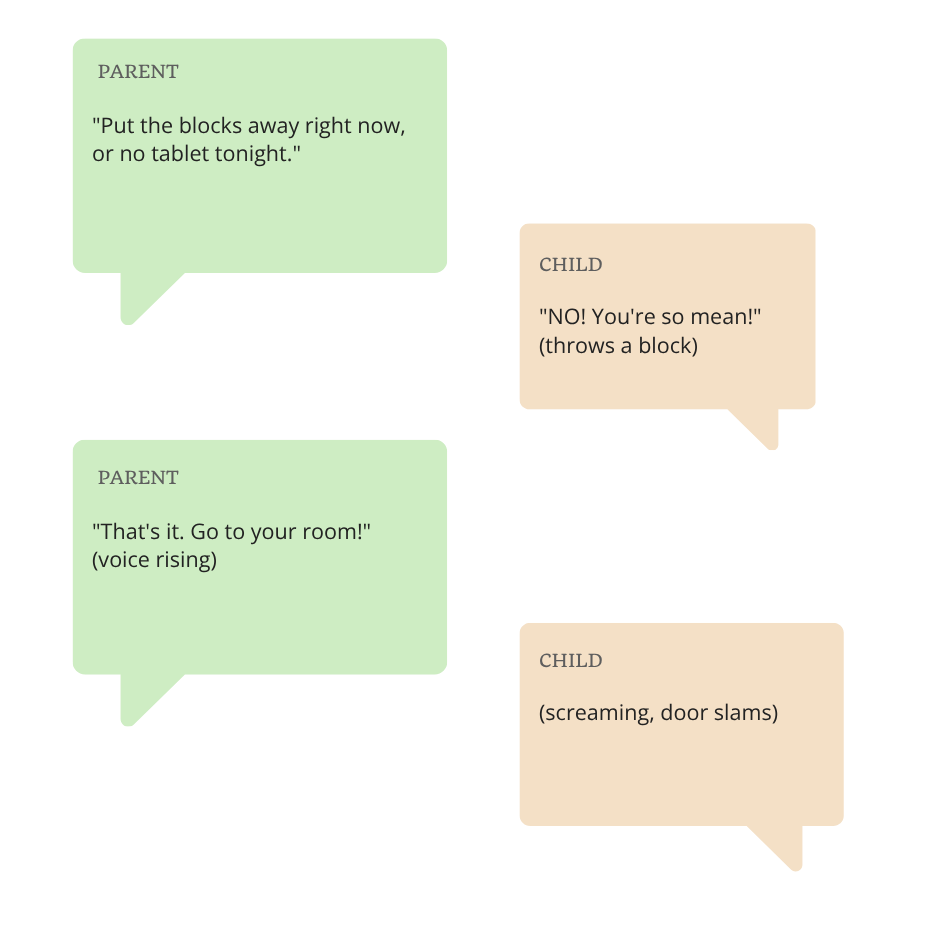
The harder you try, the bigger the meltdowns get.
What you’re living with:
- Tantrums that stretch to 30-40 minutes
- Hitting, biting, or throwing aimed at you or a sibling
- Hearing “no” ignored a dozen times a day
- Another call from daycare or school
What it’s doing to you:
- The guilt after you lose your temper too
- Walking on eggshells in your own home
- Wondering, quietly, if you’re the problem
- Watching other families seem to have this figured out
What you believe:
Your child shouldn’t have to be “fixed” in order to be loved. And you shouldn’t have to choose between being warm and being in charge. Good parenting can be both.
Here’s the thing worth naming: your child isn’t the enemy, and neither are you. The real problem is a disconnect-and-escalate cycle, a pattern where big feelings meet bigger reactions, and everyone ends up further apart instead of closer. That pattern can be interrupted. That’s what PCIT is built to do.
— YOU DON’T HAVE TO FIGURE THIS OUT ALONE
You don’t have to figure this out alone, and neither does your child.
Every PCIT session at Kid Matters Counseling is led by a licensed clinician trained in this specific model, coaching you live, in real play with your own child, so new skills take root in your actual relationship rather than staying theoretical.
Our clinicians share a common approach rooted in one belief: play is a child’s natural language. Rather than asking kids to explain feelings they don’t have words for yet, we help them show it, while coaching parents in real time so the changes hold at home, not just in session.

— THE PLAN
Three steps back to a calmer home

Talk it through
A free 15–20 minute phone consultation. No pressure, just a conversation about what’s happening at home and whether PCIT is the right fit for your child.

Learn in the room
You and your child play together while your clinician coaches you live, building connection first, then calm, consistent structure, so you get feedback in the exact moment you need it.

Take it home
You’ll practice the same skills between sessions, so the shift shows up in daily life: bedtime, mealtime, siblings, not just during your appointment.
— WHAT IS PCIT?
A therapy where you’re the one who changes the room.
Parent-Child Interaction Therapy (PCIT) is a short-term, evidence-based therapy for children roughly ages 2 to 7 who are struggling with big behaviors such as tantrums, defiance, aggression, or difficulty following directions. Unlike traditional talk therapy, PCIT coaches you live, in real play with your own child, so new skills take root in your actual relationship instead of staying theoretical.
PHASE ONE
Child-Directed Interaction (CDI)
Your child leads the play. You’re coached in the “PRIDE” skills, attention that rebuilds warmth and gives your child positive, focused connection.
Praise Reflect Imitate Describe Enthusiasm
PHASE TWO
Parent-Directed Interaction (PDI)
You lead the structure. You’ll learn clear, calm, consistent ways to give directions and follow through, so limits feel steady instead of like a fight.

— IS IT TIME?
Signs PCIT might help your family
PCIT isn’t only for “severe” behavior. Many families start here simply because daily life feels harder than it should. Consider a consultation if you recognize several of these:
Tantrums that feel longer or more intense than what’s typical for their age
Hitting, biting, or aggression toward you, siblings, or peers
Frequent defiance or ignoring instructions, at home or at school
Daycare or school raising concerns about behavior
A noticeable change in behavior after a stressful event such as a divorce, a move, or a loss
A history of trauma or abuse affecting how your child responds to stress
You feel like you’re in constant conflict, or quietly disconnected from your child
You’ve tried the advice in every parenting article and it isn’t sticking
— WHY PARENTS TRUST THIS APPROACH
The research behind the results

8%
of U.S. children ages 3–17 currently have a diagnosed behavior disorder. If this is your family, you’re far from alone.
d = 0.64
effect size for reduced child behavior problems found in a randomized controlled trial of PCIT, with gains still holding at 18-month follow-up.
~54%
of children with a diagnosed behavior disorder ever receive treatment. Reaching out puts your child among those who get support early.
2-7
the age range PCIT is designed for. Early enough that new patterns of connection have time to take hold.
Research also points to PCIT’s value for children who’ve experienced trauma or abuse, showing reductions in trauma-related symptoms alongside lower parenting stress, a good fit with our clinicians’ attachment- and trauma-informed approach.
Sources: CDC, National Survey of Children’s Health, 2022–2023 · Bjørseth & Wichstrøm, “Effectiveness of PCIT in the Treatment of Young Children’s Behavior Problems,” PLOS ONE, 2016 · Systematic review, “PCIT for Disruptive Behavior,” 2024.
— THE PLAN
Three simple steps to get your child support.
Schedule an Appointment
Fill out the contact form to get started!
Let’s Make a Plan
We get to know your child’s history, temperament, and what safety and trust look like for them specifically.
Nuture Hope
We’ll guide you on the journey to cultivate healing & nuture hope.
— COMMON QUESTIONS
Frequently asked questions
What ages is PCIT designed for?
PCIT is designed primarily for children ages 2 to 7, though some adaptations extend slightly beyond that range depending on developmental readiness.
How long does treatment usually take?
Most families complete PCIT in roughly 12–20 weekly sessions, moving through the two skill phases (CDI, then PDI) until specific mastery goals are met. Pacing depends on your child and how quickly skills take hold.
What actually happens during a session?
You and your child play together while your clinician coaches you in real time, often through a discreet earpiece, sometimes in the room, offering specific, in-the-moment guidance rather than feedback after the fact.
Will my child know they’re “in therapy”?
Most kids simply experience it as special, focused playtime with a parent. The structure and coaching happen on the adult side of the conversation.
Is PCIT appropriate if my child has experienced trauma or abuse?
Yes. Research supports PCIT as an effective approach for children who’ve experienced trauma, and it pairs naturally with our clinicians’ attachment- and trauma-informed training.
What if my child also has an ADHD or autism diagnosis?
PCIT is often used alongside these diagnoses. Studies have found improvements in behavior, emotional awareness, and parent-child interaction for children on the autism spectrum and those with attention-related challenges.
How is PCIT different from general play therapy here?
PCIT is a structured, time-limited, skills-based coaching model done with parent and child together. Broader play therapy tends to be more open-ended and is often used for deeper trauma processing, sometimes with the child alone.
Do you accept insurance?
We are committed to your child’s privacy, their confidentiality, and want you to have complete control over their health records. Submitting a mental health invoice for reimbursement carries a certain amount of risk to your child’s confidentiality, privacy and future capacity to obtain health or life insurance or even a job. That is why we do not directly bill your insurance.
We can, upon request, provide you with receipts and a coded visit bill (called “super bills”) which you may submit to your insurance company for out-of-network reimbursement if you choose. We encourage you to check with your insurance regarding the specifics of your policy.
If you’d like to know your insurance coverage use our step-by-step guide in our Kid Matters FAQ – V2 – Updated 5/11/2022
Kid Matter Articles on Trauma in Children

3 Ways to Parent a Highly Sensitive Child in a World That Rewards Toughness
Has anyone ever looked at your child, maybe a teacher, a family member, or maybe even a well-meaning stranger at a birthday party, and said something like “they just need to toughen up a little”? And maybe in the moment you smiled and nodded. But on the inside,…

The 5 Signs of Masking Parents Need to Know About
Okay, raise your hand if this has ever happened to you. You pick up your child from school and the teacher says, “They had a wonderful day! So focused, so kind, so helpful.” And you smile and say thank you. Then your child gets in the car and dissolves. Completely….

How Play Therapy Can Help Adolescents
If you’re a parent of a child who struggles with anxiety, anger, or big emotional reactions, you may feel like your child is stuck, and you’re not sure how to help them move forward. Many parents come to us wondering about something very specific: “My child is getting…
New Clients Call: (855) 586-1802
Current Clients: (855) 543-7687
Ask Us Anything!

We help anxious kids and frustrated parents. We serve Hinsdale & the Western Suburbs of Chicago.
Made with ♥︎ in Hinsdale, Illinois for Chicago
Built By Brand Your Practice.
© 2026 Kid Matters Counseling, P.C.
Kid Matters Counseling, P.C. DISCLAIMER: This website and blog are for informational, educational and general discussion purposes only. It is understood that no guarantee or warranty arises from the information provided, discussed or commented upon in this website and blog nor does it constitute legal or other professional advice on any subject matter. Access to this website and blog is voluntary and at the sole risk of the user. If you think that you have a medical emergency (including clinical), call your doctor or 911 immediately. A licensed medical professional should be consulted for diagnosis and treatment of any and all medical conditions. While the information contained within this website and blog is periodically updated, no guarantee is given that the information provided is correct, complete, and/or up-to-date. See our complete Privacy Policy and Terms of Service.