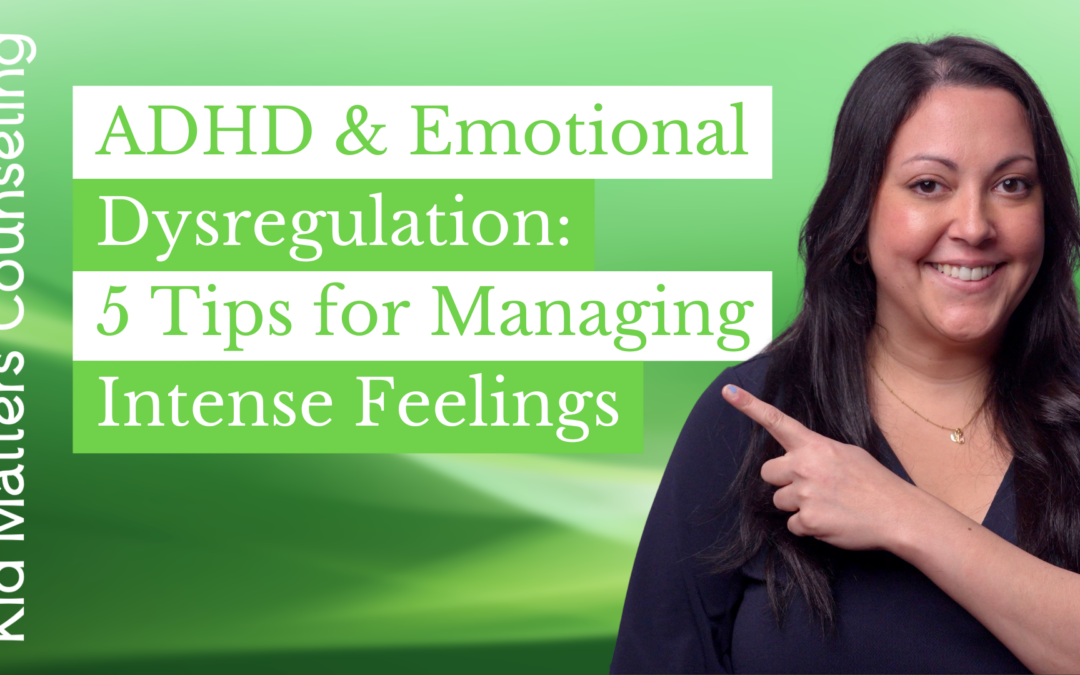
Parenting a child with ADHD is a lot. And I don't mean the focus stuff or the wiggles, although yes, those too.
I mean the feelings. The big, fast, overwhelming feelings that seem to show up out of nowhere and take over the whole room.
One minute things are fine, and the next minute there are tears because the cheese touched the crackers.
If that sounds familiar, I want you to know: you're not doing it wrong. This is just what ADHD and emotions look like together.
I'm Kristy Mahal, a Licensed Professional Counselor at Kid Matters Counseling. I work with kids with ADHD, anxiety, and big emotions every day and today, I want to give you five simple things you can try at home, starting today.
But before we get into Tip #1, I want you to know that what you're seeing isn't defiance in your child. And it isn't bad parenting.
It's a brain that feels things deeply and quickly, and just hasn't learned yet how to slow that down. The good news? That's something we can actually help with.
1. Wait out the wave. Don't fight it.
When your child is in the middle of a big feeling, their thinking brain has kind of gone on a little vacation. Which means this is not the moment for problem-solving, explaining, or consequences.
I know that feels counterintuitive, but trying to reason with a flooded child is a little like trying to have a calm conversation in the middle of a thunderstorm. The storm has to pass first.
So instead of jumping in with words, just stay close. Let them know you're there. The conversation can happen once everyone's breathing again.
Try this: "I'm right here with you. You're safe. We can talk about it when you're feeling a little better."
That's it. Simple, steady, and it works.
2. Be the calm in the room, even when it's hard.
Here's something kind of amazing about kids and the people they love: when your nervous system is calm, it actually helps their nervous system settle down too.
It's not magic, it's just how we're wired as human beings. We co-regulate. We sync up.
So when things escalate, the most powerful thing you can do is get quiet and steady. Not because you aren't frustrated, you're allowed to be frustrated, but because your calm is genuinely contagious.
Think of yourself as the emotional anchor. They're going to hold onto whatever you're putting out there.
Try this: Before you respond, take one slow breath, soften your face, and lower your voice. Your body is sending a message before you say a word.
3. Practice talking about feelings when things are calm.
One of the best things you can do for a child who struggles with big emotions is help them build their feelings vocabulary. Not during a meltdown, but in the quiet, ordinary moments of the day. At dinner, in the car or before bed.
When kids can find words for what they're feeling, it helps their brain start to process those emotions instead of just being swept away by them.
It doesn't have to be a big serious conversation. It can be as simple as "what was the hardest part of your day?" and then actually listening to the answer.
Try this: At bedtime, ask: "What was a big feeling you had today?" No advice, no fixing. Just curiosity and maybe a little "I had big feelings today too."
4. Build a calm-down plan together before you need it.
This one is so much fun and it really works. When things are good, such as on a relaxed afternoon or on a weekend morning, sit down with your child and ask them: "What helps you feel better when you're really upset?"
Maybe it's squeezing a stuffed animal. Maybe it's jumping around for a minute. Maybe it's just being in their room with the door closed for a bit.
Whatever they say, write it down together and make it official. You can call it their calm-down menu or their feelings toolkit, whatever feels right for your kid.
Having a plan ready before the hard moment makes it so much easier to use when they actually need it.
Try this: Make a "calm-down menu" with 3 to 5 options your child picks themselves. Let them illustrate it, decorate it, and put it somewhere they can actually see it.
5. Always come back to reconnect.
After a hard moment, once the storm has passed and everyone has had a chance to breathe, come back. Not to revisit what went wrong or to deliver a consequence. Just to reconnect.
A simple hug, a "hey, I love you, and that was really hard for both of us" matters more than you might think. It teaches your child that hard moments don't break relationships. That you're still there on the other side of the big feeling.
And honestly? That's the thing that builds emotional resilience more than almost anything else. The repair.
Try this: Say "That was a tough one. Are you okay?" Short, warm, and said with a hand on their shoulder or even a hug if they'll let you.
Navigating big emotions with your ADHD child takes patience, practice, and honestly a lot of grace for yourself too. You're learning alongside your kid, and that's not a small thing.
If you'd love some extra support, whether that's for your child, for you, or for both of you together, we're here. At Kid Matters Counseling, this is exactly the kind of work we do every day.
Reach out and schedule an appointment with us today. We'd love to be part of your team.

Kristy Mahal
Child & Adolescent Therapist | MA, LPC
I work with children and adolescents who are learning how to handle big emotions, navigate relationships, and figure out who they are.




New Clients Call: (855) 586-1802
Current Clients: (855) 543-7687
Ask Us Anything!

We help anxious kids and frustrated parents. We serve Hinsdale & the Western Suburbs of Chicago.
Made with ♥︎ in Hinsdale, Illinois for Chicago
Built By Brand Your Practice.
© 2026 Kid Matters Counseling, P.C.
Kid Matters Counseling, P.C. DISCLAIMER: This website and blog are for informational, educational and general discussion purposes only. It is understood that no guarantee or warranty arises from the information provided, discussed or commented upon in this website and blog nor does it constitute legal or other professional advice on any subject matter. Access to this website and blog is voluntary and at the sole risk of the user. If you think that you have a medical emergency (including clinical), call your doctor or 911 immediately. A licensed medical professional should be consulted for diagnosis and treatment of any and all medical conditions. While the information contained within this website and blog is periodically updated, no guarantee is given that the information provided is correct, complete, and/or up-to-date. See our complete Privacy Policy and Terms of Service.